- calendar_today August 13, 2025
Utah’s commercial real estate market enters 2025 with a sense of cautious optimism. While not immune to national economic pressures—like inflation, higher interest rates, and shifting office demand—the state’s fundamentals remain strong. Population growth, a diverse economy, and infrastructure investments continue to drive interest from developers and institutional investors.
Salt Lake City, Provo-Orem, and Ogden-Clearfield remain central to the state’s growth story. But in 2025, the emphasis is shifting from rapid expansion to smart, sustainable development across the Wasatch Front.
Industrial Real Estate: A Freight-Forward Future
Utah’s industrial market has consistently outperformed in recent years, and 2025 is no exception. Salt Lake City has become a strategic hub in the Mountain West for logistics, warehousing, and light manufacturing, especially with its proximity to I-15 and major Western metros.
Key submarkets like West Valley City, Draper, and North Salt Lake are maintaining low vacancy rates—hovering around 3.8%—with continued demand from e-commerce, building materials suppliers, and 3PL providers.
Developments near the Salt Lake City International Airport and the Northwest Quadrant Inland Port are attracting large-scale users and logistics firms. Meanwhile, mid-size industrial users are targeting Logan, Spanish Fork, and Tooele where land is more affordable and entitlements are easier to secure.
Developers are incorporating sustainable construction, automation-ready facilities, and high-bay specs to stay competitive, as Utah aims to become a Western logistics hub with lower overhead than California.
Multifamily: Strong Demand, Pressured Supply
Utah’s multifamily sector continues to shine in 2025, fueled by rapid in-migration, a youthful population, and a persistent housing shortage. With the state’s population surpassing 3.5 million, housing demand remains high—particularly among renters priced out of homeownership due to elevated mortgage rates.
Salt Lake City’s urban core and Sugar House district are seeing a return of renters, but the fastest growth is in suburbs like South Jordan, Lehi, and Herriman, where new Class A and workforce housing are in high demand.
Provo-Orem, bolstered by student and tech-driven demand, is also experiencing strong absorption, with newer multifamily properties near Utah Valley University and BYU achieving occupancy rates above 94%.
Rent growth has slowed slightly compared to the pandemic boom years but remains steady, especially in areas with limited new supply. Developers are leaning into Build-to-Rent (BTR) single-family housing models, particularly in Davis and Utah counties, to meet the preferences of family-oriented renters.
Office Market: A Market in Realignment
Utah’s office market in 2025 is still adjusting to the hybrid work era. Salt Lake City’s central business district continues to experience elevated vacancy—estimated around 19%—with some downsizing by national tenants and tech firms reassessing their space needs.
However, suburban office submarkets like Lehi, Sandy, and Cottonwood Heights are faring better. Employers prefer locations near workforce housing and transit infrastructure, and new developments that include collaboration space, high-speed connectivity, and ESG features are seeing stronger lease-up rates.
Medical office buildings (MOBs), life sciences labs, and coworking spaces remain strong performers, particularly near University of Utah Health, Intermountain Medical Center, and in research parks across the Salt Lake Valley.
A trend to watch is the adaptive reuse of outdated office towers into mixed-use or residential formats. Salt Lake’s city planners are increasingly open to conversions, especially as housing affordability remains a crisis point.
Retail: Suburban Revival and Service-Led Recovery
Utah’s retail CRE sector is evolving to meet changing consumer preferences in 2025. Malls and big-box anchors have struggled in parts of Salt Lake and Ogden, but suburban strip centers, grocery-anchored plazas, and lifestyle retail districts are thriving.
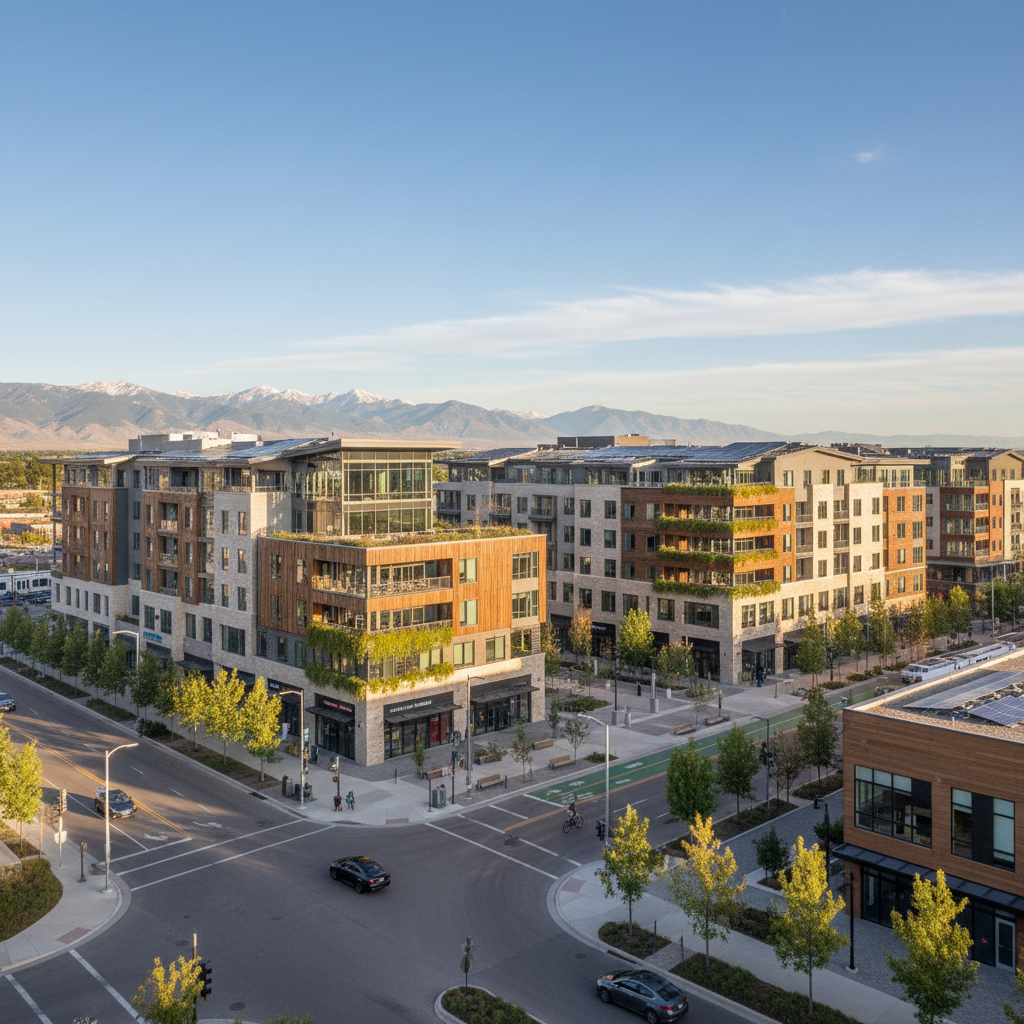
New mixed-use developments in Herriman, Spanish Fork, and Farmington Station blend retail, dining, and entertainment in walkable formats. These areas benefit from rising residential density and higher family-centric spending.
Retailers focused on health, fitness, fast-casual dining, and locally sourced products are outperforming national chains. Experiential retail—from axe-throwing venues to VR gaming lounges—continues to attract younger consumers.
Retail vacancy across the state remains manageable at around 5.5%, and average lease rates are holding firm due to strong demand for well-located, service-oriented properties.
Sustainability and Tech-Driven Construction Take Priority
In 2025, Utah developers are increasingly prioritizing green building standards, water conservation, and energy efficiency, especially as climate conditions and regulatory expectations shift. LEED-certified developments and mass timber construction are gaining traction, especially in office and multifamily builds.
At the same time, PropTech and construction automation are reducing build times and improving efficiency. Salt Lake-based startups are introducing smart building management systems, automated HVAC controls, and carbon tracking tools now sought after by institutional owners and tenants alike.
Public-private partnerships are emerging to encourage green development in transit-oriented areas, especially near the UTA TRAX and FrontRunner rail lines, reflecting Utah’s long-term growth and sustainability goals.
Secondary and Tertiary Markets Gaining Investor Interest
Beyond the Wasatch Front, St. George, Logan, and Cedar City are becoming viable CRE investment markets. These areas are seeing increasing population growth, tourism expansion, and development of regional healthcare and higher education infrastructure.
In St. George, proximity to national parks and a growing retirement population is boosting demand for hospitality and medical office assets. Cedar City, anchored by Southern Utah University, is seeing demand for student housing, retail, and hybrid office properties.
Investors seeking lower barriers to entry and less competition are targeting these tertiary cities for value-add acquisitions, medical office portfolios, and retail redevelopment strategies.
Infrastructure, Policy, and Development Incentives
Utah’s ongoing infrastructure investments—including I-15 corridor expansions, broadband deployment, and inland port development—are supporting long-term CRE viability. The state remains business-friendly, with tax incentives for qualified industrial and manufacturing projects through the EDTIF (Economic Development Tax Increment Financing) program.
Local municipalities are also offering TIF districts, impact fee waivers, and density bonuses to encourage transit-oriented, mixed-use, and affordable housing developments.
However, land costs, water rights, and zoning delays continue to present hurdles for new developers, especially along the Wasatch Front where demand and development pressure are highest.
2025 Outlook: Utah’s Commercial Real Estate Is Still Ascending
While the pace has cooled from the explosive post-pandemic growth of 2021–2023, Utah’s commercial real estate market in 2025 is far from slowing down. It is maturing—shifting toward more sustainable, transit-connected, and community-driven development.
With strong demographics, a resilient economy, and growing secondary markets, Utah remains a compelling destination for long-term CRE investment. The challenge for developers and investors now lies in balancing opportunity with restraint, innovation with infrastructure, and growth with livability.