- calendar_today April 28, 2026
Comparing Educational Ecosystems: Regional vs. International
When it comes to education, the ecosystem in which learning occurs can greatly influence outcomes, opportunities, and personal development. The divide between regional and international educational ecosystems isn’t just geographical; it’s also about culture, methodology, and expectations. At the TAIE International Institute, we analyze these differences to help students and educators understand the environments that best suit their needs. In this article, you’ll discover the key distinctions between regional and international educational frameworks and how they shape the experiences of students around the world.
The Foundation of Educational Ecosystems
Every educational system is built upon its own set of principles, policies, and practices shaped by cultural, economic, and political factors. Regional educational ecosystems typically focus on a localized approach—where curricula, pedagogies, and assessment methods are tailored to meet the unique needs of the community they serve.
In contrast, international educational systems adopt a more global perspective. They promote a broader set of standards that aim to create a more universal framework for learning. The focus is on international benchmarks that facilitate student mobility across borders. This raises the question: what specific differences exist between local and global education systems, and how do they affect student learning?
Curriculum Design: Tailored vs. Universal
Curriculum is the backbone of any educational ecosystem. In regional systems, the curriculum is often reflective of local culture, history, and values. For instance, a regional school in Japan will incorporate elements of Japanese culture in its teaching methodologies, whereas a school in Canada might focus on multiculturalism.
On the other hand, international curricula like the International Baccalaureate (IB) or the Cambridge International Examinations seek to establish some level of uniformity across different countries. These programs aim to prepare students for a global marketplace, promoting skills like critical thinking, collaboration, and creativity. Yet, the challenge lies in balancing this universal approach with respect for cultural specificity.
Assessment Methods: Diverse Outcomes
Assessments are another critical area where these ecosystems diverge. Regional systems often employ standardized tests to evaluate student performance based on local norms and objectives. While this method may provide insight into a student’s grasp of localized content, it can sometimes limit the acknowledgment of diverse talents and skills.
Conversely, international assessments are designed to evaluate a student’s performance against a global standard. These assessments often focus on critical thinking and the application of knowledge rather than rote memorization. By doing so, they prepare students not just to pass tests, but to tackle real-world problems. However, some critics argue that such assessments can overlook local context and may not accurately reflect a student’s capabilities.
Teaching Methodologies: Teacher-Centered vs. Student-Centered
Teaching approaches vary widely between regional and international educational ecosystems. Traditional regional systems often rely on teacher-centered instructional methods, where the educator is the primary knowledge source. This approach can sometimes stifle student engagement and critical thinking.
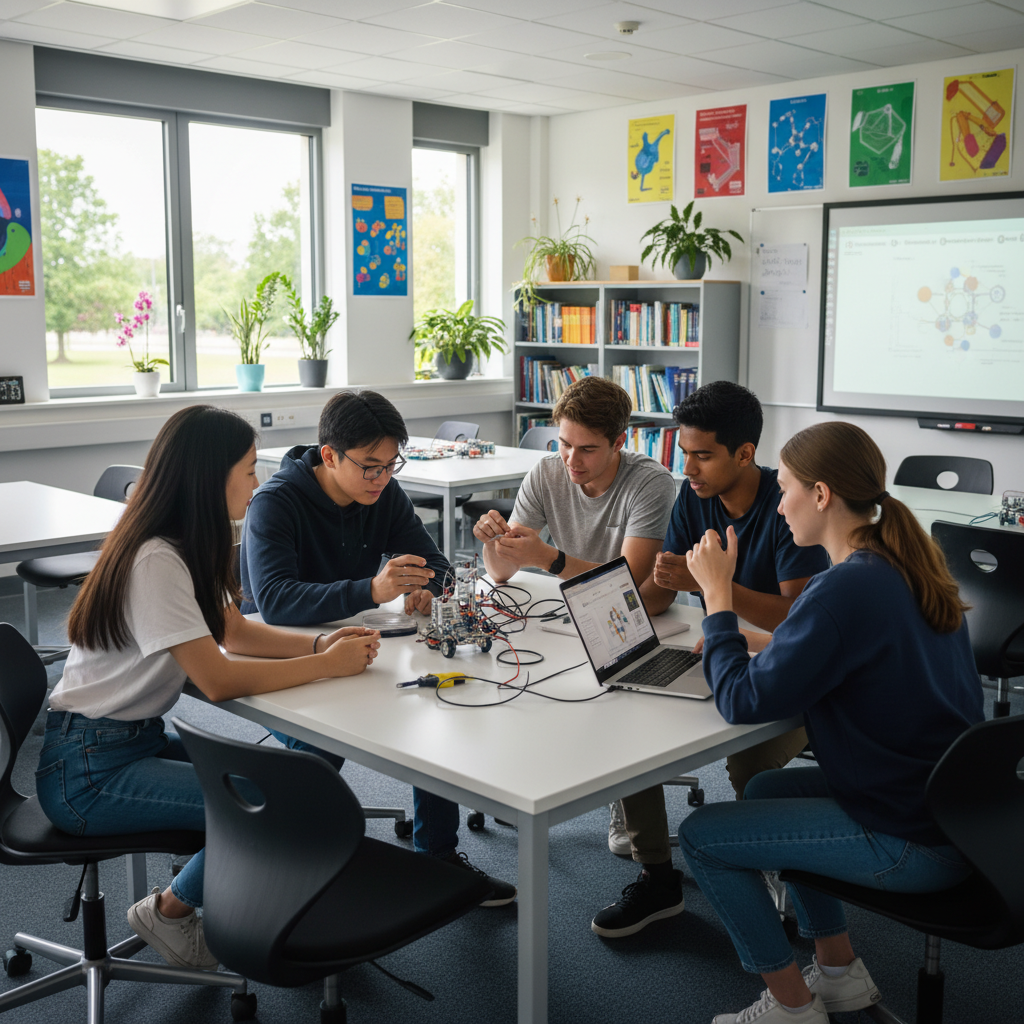
In contrast, many international schools adopt student-centered methodologies, encouraging collaborative projects and active learning. In these environments, students are expected to take responsibility for their learning, fostering a sense of independence and self-motivation. A student in this system might find themselves working on a project about renewable energy, developing skills in teamwork, research, and problem-solving.
Inclusivity: Access and Representation
Inclusivity presents another point of divergence. Regional educational ecosystems may struggle to accommodate a diverse student body, particularly in areas with significant socioeconomic divides. Programs that cater to everyone can be limited in scope and resources, resulting in unequal educational opportunities.
International educational systems often prioritize inclusivity, aiming to attract students from different cultural backgrounds. Some even employ practices that focus on holistic education, assessing emotional, social, and cognitive development. However, maintaining inclusivity can be challenging, especially when resources are stretched thin in diverse classrooms.
Outcome Metrics: Success and Employability
When comparing the outcomes of both educational ecosystems, it’s essential to define what success looks like. Many regional systems measure success through local employability and retention rates. A student graduating from a regional school may find more paths available within their community, reinforcing the connection between education and local industry.
International systems, however, often focus on the global employability of their graduates. Students who navigate an international curriculum may find themselves equipped with transferrable skills that are highly sought in various industries around the world. Global mobility becomes a significant advantage, as these students learn to adapt to various cultures and working environments.
Career Pathways: Preparing for the Future
Choosing between regional and international educational ecosystems can impact career trajectories significantly. Students who undergo regional education may often pursue careers tied closely to their local economy, while those in international systems may have opportunities for global careers.
Furthermore, international schools often emphasize networking and real-world experience, which can lead to more extensive career options. For instance, a student participating in an international exchange program might not only learn about another culture but also gain insights into a different business landscape—a factor that can make them more appealing to employers in an increasingly interconnected world.
Conclusion: Finding Your Fit
The differences between regional and international educational ecosystems are profound and impact students in various ways. While regional systems provide localized knowledge and often a sense of belonging, international systems offer a broader perspective that can lead to greater global employability.
Ultimately, the best choice depends on your personal goals, values, and circumstances. Whether you’re leaning toward a regional or international education, the key is to find a system that resonates with your aspirations and prepares you for the future you envision. Are you ready to explore your options?