- calendar_today August 24, 2025
How The Sandman Balances Myth and Humanity in Its Ending
The Sandman‘s Season 2, a brisk six episodes on Netflix, just dropped, and it’s the final season. If you liked Sandman Season 1, and there are several reasons to have liked it—pitch-perfect tone, gorgeous production values, stellar cast—you will like this one, too. Neil Gaiman’s seminal graphic novel series is a gorgeously surreal mix of history, myth, metafiction, and plain-old weird, and while this final season returns to that dreamy quality a bit after Season 1 spent a lot of time on the characteristically grounded arc of its protagonist Morpheus, the Dream King, it never loses sight of the comics’ dual nature as both anthology and novel.
Netflix announced in January that The Sandman would be canceled after Season 2, after rumors that the network’s decision to stop production had something to do with the sexual misconduct allegations against Neil Gaiman, which he has denied and which have since been dismissed in court. In an interview on X, showrunner Allan Heinberg addressed fan speculation that Gaiman’s behavior might have affected the series’ future, to clarify that The Sandman had been conceived as a two-season series from the start, that both he and Gaiman were confident in the strength of the first season and the story it had left to tell, and that with the creative team’s insight into how much of the comics the first season had adapted, they “knew that we were going to run out of material” around Season 2. In other words, their gut feeling about how much story there was that worked for a limited series—and how much they thought Netflix would be willing to produce—was right on the money.
Season 1 was based on Preludes and Nocturnes and The Doll’s House, and the two bonus episodes “Dream of a Thousand Cats” and “Calliope” from Dream Country. Season 2 mostly covers Seasons of Mists, Brief Lives, The Kindly Ones, and The Wake, with important story elements from Fables and Reflections—specifically “The Song of Orpheus” and parts of “Thermidor”—plus “A Midsummer Night’s Dream” from Dream Country, which won a Will Eisner Comic Industry Award for Best Short Story in 1991. The bonus episode adapts the 1993 standalone spinoff Death: The High Cost of Living, and the events of A Game of You and various short stories are notably absent, although not elements crucial to the arc of the Dream King.
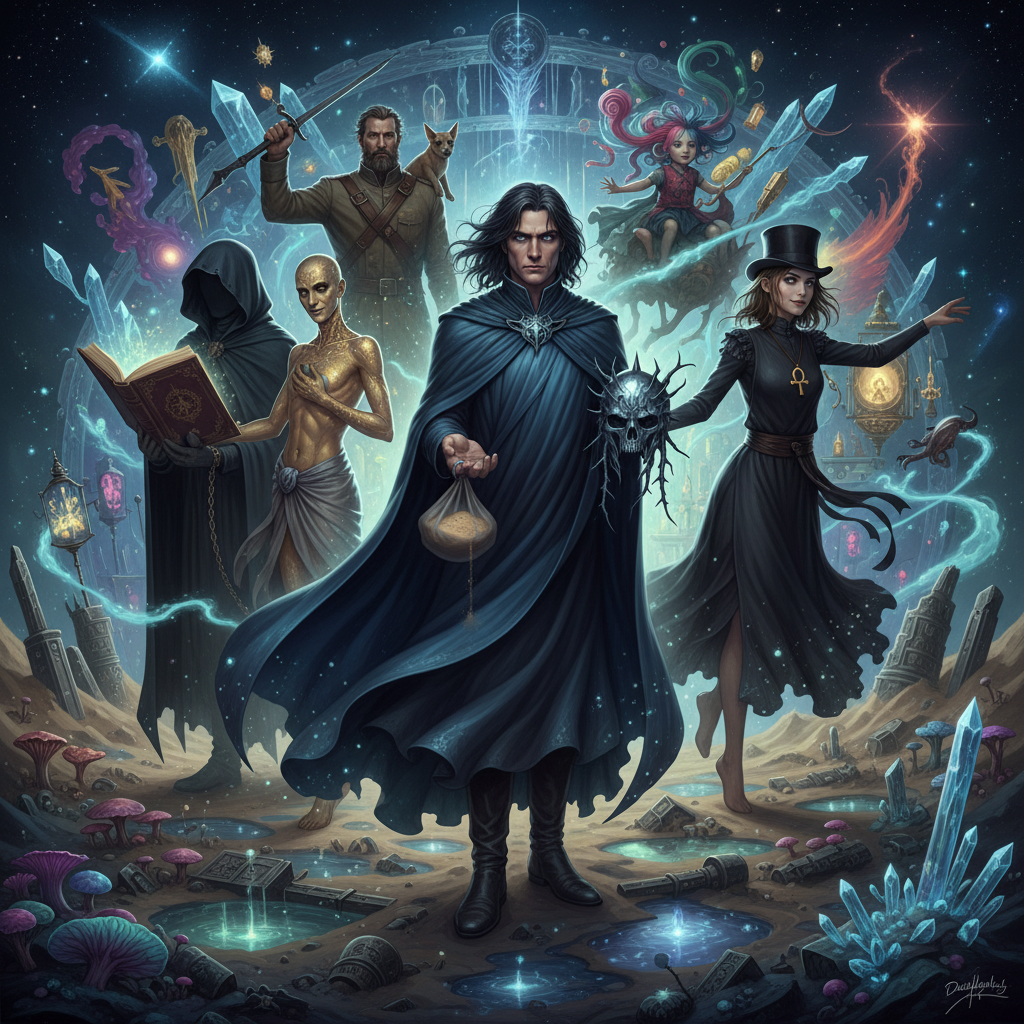
Season 1 left Morpheus with many victories: freedom from imprisonment, most of his talismans, and some semblance of order in his realm, the Dreaming. He had thwarted the plans of his escaped hellhound Corinthian (Boyd Holbrook) and solved the extradimensional tesseract crisis the Vortex represented, but in Season 2, he is still rebuilding the Dreaming in the afterlife between worlds and gets an uncharacteristic call to a family summit with his sister Death (Kirby Howell-Baptiste), Desire (Mason Alexander Park), Despair (Donna Preston), and Delirium (Esmé Creed-Miles) by his sibling Destiny (Adrian Lester).
The family pow-wow ultimately tasks Dream with a rescue mission for his former lover Nada (Umulisa Gahiga), the queen of the First People (Amazonians, in the comics) of whom he had originally absconded with the titular World of Dreams and later sentenced to eternal damnation in Hell, thus forcing him to cross paths yet again with Lucifer Morningstar (Gwendolyn Christie), who has not forgotten the hammer to her head she received from him in Season 1. Surprisingly, she appears to have settled down and taken her considerable personality and attitude to work; instead of an epic fight, she tells Dream the shocking news that she quit Hell and is resigning in favor of someone better, leaving him with its key to the empty dimension and a staggering variety of candidates to choose from, from the Norse gods Odin, Order, Chaos, and the ancient (non-Talia) demon Azazel.
After Delirium finds herself mourning the mysterious disappearance of her missing brother Destruction (Barry Sloane), who faked his death and left his realm aeons ago, Dream is inexorably led toward his destiny, which is to die to spill enough of his own family’s blood to rouse the Furies and the vindictive wrath of the Kindly Ones.
The high points and low points of Sandman’s final season and a touching epilogue
All the wonderful production values are still here, the same level of thoughtful casting, and the crisp CGI imagery that makes Gaiman’s comics come so vividly to life, although the season’s pacing has come under some criticism from audiences for being a bit leisurely. A deliberate and even languid pace is the whole point, really, though.
The low point is a specific and ultimately unnecessary scene in the episode “Time and Night,” in which Morpheus travels to see his parents, Time (Rufus Sewell) and Night (Tanya Moodie), for assistance. This is not a problem on a canonical level, because these people really are his parents; he is their son, they are his Endless siblings. It’s the scene itself: the script for this encounter has some real clunkers of dialogue that even a seasoned actor of Rufus Sewell’s caliber is hard-pressed to overcome, and it reads more like a series of therapeutic visits than it does a paragon of high mythology.