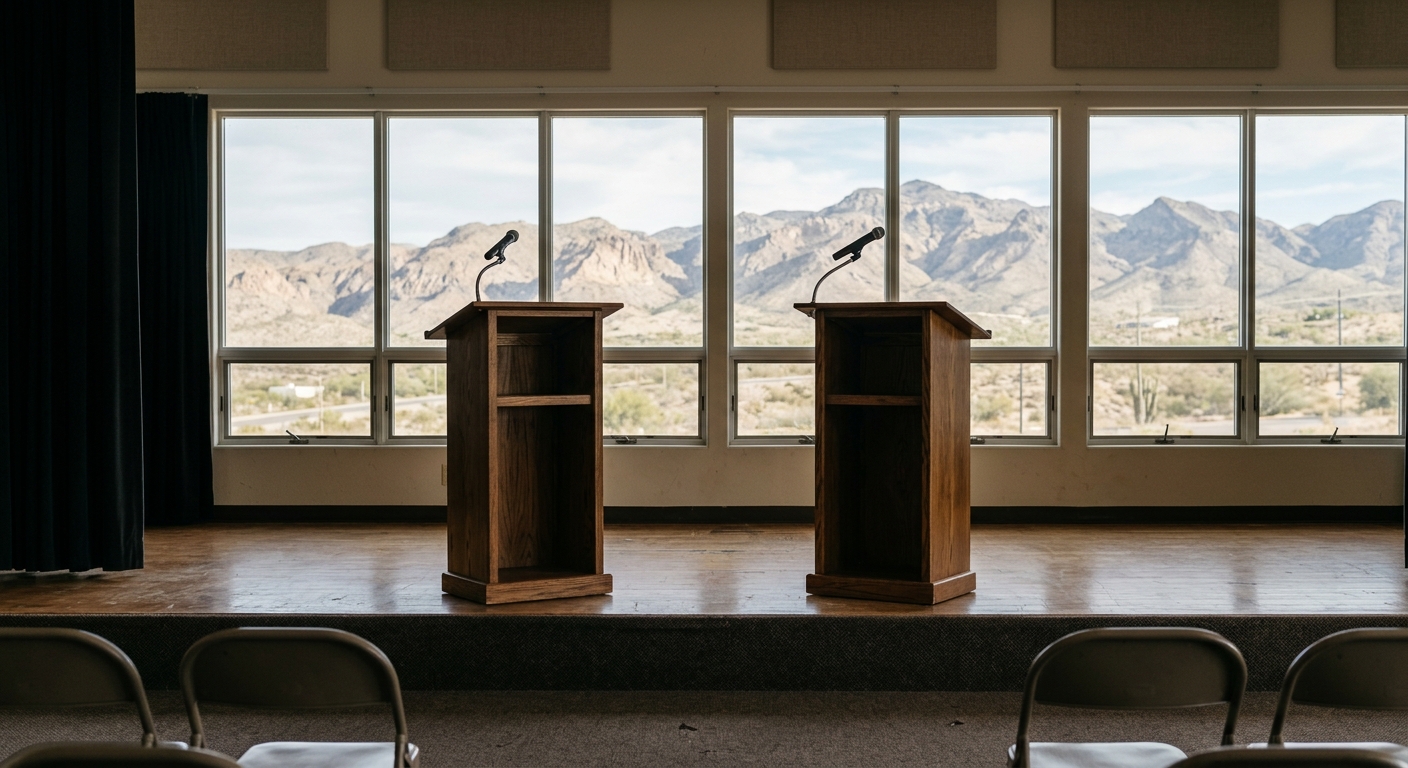
AI-generated illustration; not a photograph of the reported event.
- calendar_today October 9, 2026
Utah Congressional Debate Puts Kennedy and Larsen in the Spotlight
In a closely-watched showdown, incumbent Republican Congressman Mike Kennedy and Democratic challenger Jonny Larsen clashed in a televised debate for Utah's Fourth Congressional District. The event, held on the campus of Snow College in Ephraim, highlighted both partisan divides and personal differences on issues ranging from economic affordability to public lands policy.
Economic Affordability Sparks Discussion of Foreign Policy
The opening volley of the debate centered on the economy and rising costs, but quickly shifted to foreign affairs, specifically the war in Iran. Rep. Kennedy emphasized his support for former President Trump and discussed his efforts to lower gas prices, notably citing the passage of the License to Drill Act, which he sponsored and said is awaiting the president's signature.
Challenger Jonny Larsen, a Marine veteran, criticized Kennedy's voting record regarding the War Powers Resolution, stating, "The immediate thing that we can do right now is end this illegal war. My opponent over here voted against the War Powers Resolution Act six times." Larsen drew on his military experience, adding, "As a veteran myself, who did two tours in combat, I understand that cost and that price that we pay with American blood."
Healthcare Costs and Social Service Programs Take Center Stage
As debate turned to healthcare costs and the funding of social service programs, tensions escalated. Larsen accused Republicans of prioritizing fiscal restraint over people's needs, saying, "Elected Republicans would allow 100 people to go hungry to just make sure one person who they think doesn't earn those rights or that food or that benefit, and I think that's a shame."
Kennedy dismissed this characterization, asserting, "The idea that any Republican, let alone myself, wants people to go hungry is nonsense... I love serving people and have served people on multiple levels on a regular basis. I donate money to help people that are hungry, but I also believe the federal government has a responsibility to be careful with tax dollars." He defended the need for proof of eligibility in programs like SNAP.
Public Lands Policy Divides the Candidates
The two candidates expressed clear differences over the management of public lands. Kennedy argued for opening some tracts of federal land to encourage housing development, suggesting it would help with economic growth and affordability. Larsen countered with a firm stance, saying, "Public lands must remain in public hands," indicating his opposition to such development proposals.
Data Center Development: Local Versus Broader Concerns
On the topic of data center development, both candidates acknowledged its importance but differed on approach. Kennedy called for data center siting to be a local decision, remarking, "I have communities right now that I know want them. Other communities don't want them, and that's where these decisions should be made." Larsen argued that many constituents oppose the current expansion and desire a moratorium until better solutions are developed to address their concerns.
The Road to the Midterm Elections
With Republicans facing challenges to maintain control of Congress in the upcoming midterm elections, the debate had added significance. In closing, Larsen positioned himself as a moderate, appealing directly to Republican voters to cross party lines. "We need to come together on the 90% of issues we all agree on instead of fighting over the 10% we don’t," he said.
Kennedy, speaking after the debate, stressed his commitment to the electorate amid ongoing concerns: "This is a hard time for a lot of people and people have a right to be angry and concerned about how things are going, but I'm deeply invested in trying to make things better."
Looking Ahead in Utah's Fourth District
The debate underscored major points of divergence in policy and outlook between the candidates in Utah's Fourth Congressional District. As the midterm elections draw closer, voters in the district will have distinct choices on issues such as public lands policy, data center development, economic affordability, healthcare costs, and the nation's role abroad. The outcome may have implications both within Utah and in the broader national political landscape.
Source: fox13now.com.