- calendar_today August 27, 2025
Since January, the Trump administration has made repeated attempts to overhaul the ESA. They argue the law’s stringent regulations impede development and prevent the “energy domination” of the U.S. Geological Survey. Executive orders signed this year instruct government agencies to revise ESA rules in a way that would speed up fossil fuel projects without full environmental reviews.
Burgum and other conservatives have said the law is ineffective, and its inflexible rules do little to encourage recovery. Scientists and legal experts say the ESA itself is not the issue; rather, it has suffered from a history of underfunding and political volatility.
“We continue to wait until species are in dire straits before we protect them,” said David Wilcove, a professor of ecology and evolutionary biology at Princeton University. “That makes recovery far more difficult and expensive.”
Critics often say the ESA’s protections don’t work because it has few success stories. But experts say the opposite is true: They say the ESA does a great job at the part of its mission that prevents species from ever being listed in the first place.
Since the ESA was enacted in 1973, only 26 listed species have gone extinct under federal supervision. By contrast, the actual number of species that may have vanished while still awaiting a listing is at least 47, and some estimates put it in the hundreds.
“The ESA works more like a critical care unit than a hotel,” Wilcove said. “It’s as though we built a great hospital but never funded enough doctors or equipment.”
The law’s best-known success story is the bald eagle. In the 1960s, the effects of the pesticide DDT and rampant habitat loss had left only a few hundred nesting pairs in the lower 48 states. After DDT was banned and the bird was granted ESA protections in 1978, its population began to rise steadily. By 2007, the bald eagle was removed from the list, with nearly 10,000 pairs flourishing nationwide.
Species such as the American alligator and the Steller sea lion have also made great recoveries with the help of targeted protections.
Under the ESA, protections apply not only to public lands but to private property as well. It’s a difference that’s led to years of conflict. More than two-thirds of listed species depend on private lands for survival, and around 10 percent are found on those lands exclusively.
“If you have an endangered species on your land, your ability to use that land is going to be limited and you can be prosecuted,” said Jonathan Adler, a professor of environmental law at William & Mary. “That discourages landowners from cooperating.”
Studies of various species have shown these rules can lead to “perverse incentives.” In research on red-cockaded woodpeckers, for example, timber was actually harvested at higher rates in the first few years in areas where the bird lived, likely to avoid future federal habitat restrictions.
Congress has tried to include various incentives over the years, such as tax breaks and conservation easements that compensate landowners for protecting habitats. However, such programs have largely been rolled back in recent years, leaving many conservationists concerned.
The Endangered Species Act was for years a bipartisan issue. Since then, it has become one of the most litigated environmental laws in the U.S. Dozens of attempts to either alter or undermine the ESA have emerged under several administrations, only to be delayed or reversed when new leaders took office.
Today, legal experts say the Trump administration’s aggressive rollback of protections, combined with a conservative-leaning Supreme Court, could permanently weaken the ESA’s reach. In the meantime, climate change and habitat loss continue to pile pressures on more species.
Andrew Mergen, a lecturer at Harvard Law School who spent decades litigating ESA cases, said the focus should be on resources, not deregulation. “The law has prevented extinctions,” he said. “The real challenge is committing enough funding and political will to help species recover, not dismantling the protections that keep them alive.”
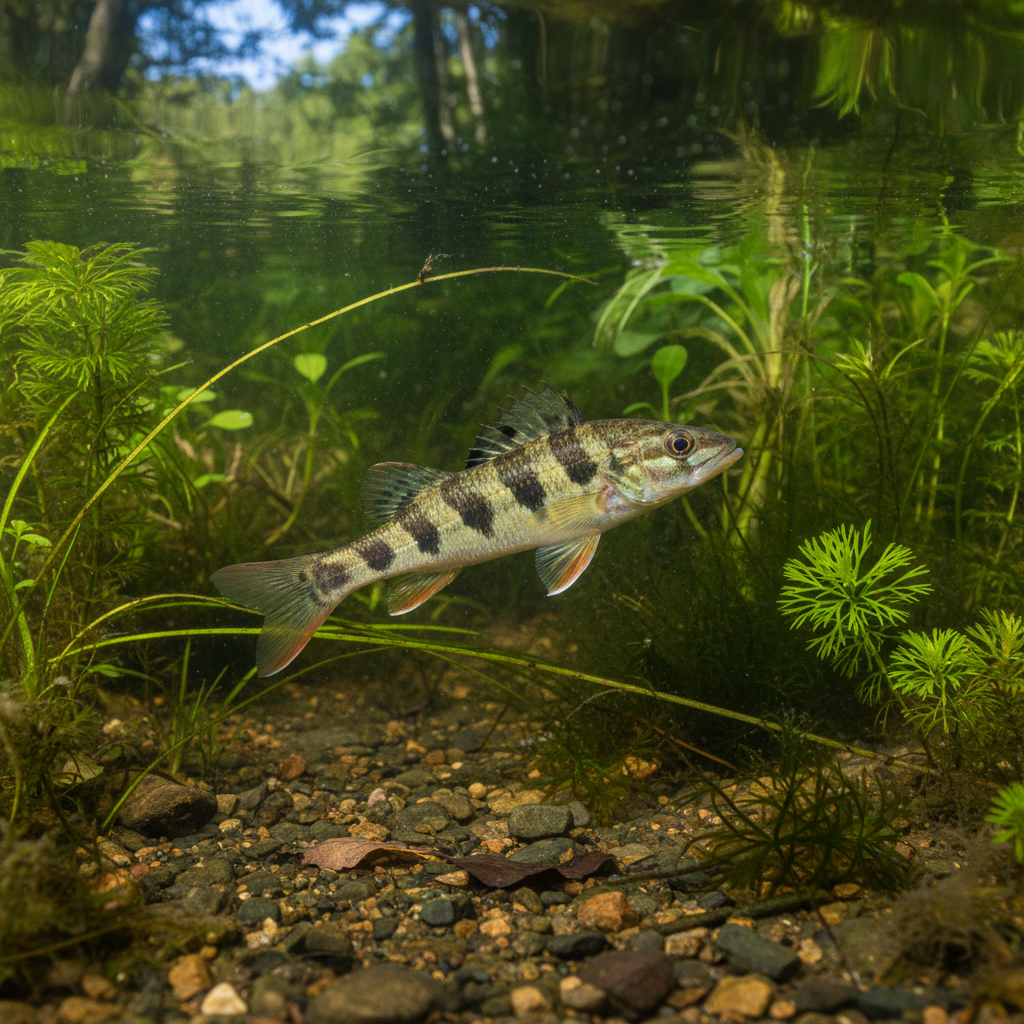
The political fights over the ESA don’t obscure all the successes. In July, the U.S. Fish and Wildlife Service announced that the Roanoke logperch, a freshwater fish, had recovered enough to be delisted. Burgum touted the fish as “proof” that the ESA is no longer “Hotel California.”
Conservationists point out the recovery took more than three decades of dam removals, wetland restoration, and the reintroduction of thousands of fish at a cost of more than $1 million—an investment that started long before Trump took office.
“The optimistic part,” Wilcove said, “is that we know how to save species when we invest in them. The question is whether we’ll make that commitment.”