- calendar_today August 25, 2025
Germany, France and the United Kingdom are gearing up to trigger the return of United Nations sanctions on Iran, three European officials said Wednesday. The so-called “snapback” mechanism is part of the 2015 Iran nuclear deal and could be triggered as early as Thursday.
The process takes 30 days, but European leaders are hoping Tehran uses that time to get back to the negotiating table, to open its facilities to international inspectors and take actions to fall back into compliance with nuclear obligations. Iran, however, has already threatened harsh retaliation if sanctions are reimposed, and the move could destabilize a region already reeling from the recent war.
Expiration Date Looms
The snapback provision is part of the 2015 Joint Comprehensive Plan of Action, the nuclear deal. It allows for JCPOA members to reinstate UN sanctions if they believe Iran is violating the deal, and it expires in October. European countries are fast-tracking the process before that deadline.
Iran has increased its nuclear program well beyond the scope of the JCPOA since former President Donald Trump unilaterally withdrew the United States from the agreement in 2018. Tehran maintains the program is for civilian purposes, but both inspectors and analysts are warning that Iran is reaching near-weapons grade levels in its production.
“Iran has now exceeded all limits and the question that the agency can now do, with the cooperation that we have, is limited,” International Atomic Energy Agency head Rafael Grossi told reporters Wednesday.
Rubio, the U.S. Secretary of State, who has been in communication with European counterparts on the matter this week, called the snapback a “very powerful piece of leverage on the Iranian regime.”
Inspectors Back in the Country
Iranian parliament passed a law in July to stop cooperating with international inspectors after a series of Israeli attacks. But Grossi announced on Wednesday that inspectors had returned to the country.
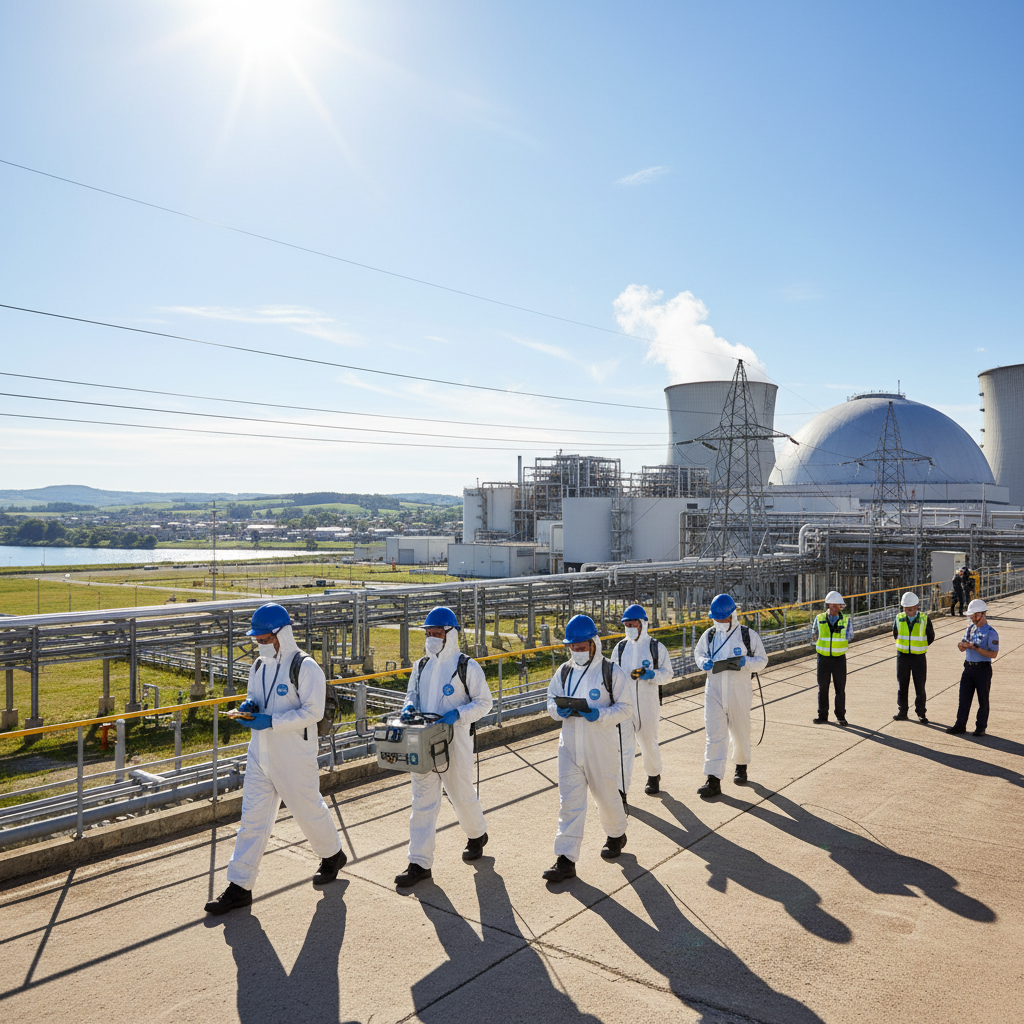
“We have inspectors on the ground, including in Bushehr today,” he said. Grossi confirmed the inspectors were at the Bushehr nuclear power plant on Wednesday. “Today we are inspecting Bushehr,” he added. “We are continuing the conversation so that we can go to all places, including the facilities that have been attacked.”
The IAEA’s inspections are meant to safeguard the NPT, or Nuclear Non-Proliferation Treaty, which Iran is still a signatory to. Tehran is reportedly considering pulling out of the treaty if the sanctions are reinstated.
Iranian Foreign Minister Abbas Araghchi confirmed on Wednesday that IAEA inspectors were at Bushehr to monitor fuel replacement at the plant following a decision by the Supreme National Security Council. Araghchi said that Iran was “not seeking new cooperation” with the IAEA and would not negotiate “compensation” for the attacks, a state media report quoted him as saying.
Fallout of Recent War
Israel has long maintained the public knowledge of Iran’s nuclear capabilities pose a threat to the country. In June, Israeli forces attacked Iran’s nuclear facilities, setting off a 12-day conflict between the two nations. Israeli cities came under attack from Iran in retaliation, and in the final days of the conflict U.S. forces were involved in three strikes on Iranian sites.
The IAEA pulled inspectors out of Iran in July, saying that the war made it impossible to monitor the facilities and that staff would be unsafe. Satellite images in the coming months showed possible damage to doors at Iran’s Isfahan Nuclear Technology Research Center.
Iran later accused the IAEA of essentially giving Israel a green light to strike, publishing details of Iran’s violations of safeguard rules as justification for the attack.
Domestic Reaction
The IAEA return, at least in the Bushehr facilities, has faced domestic criticism in Iran. Kamran Ghazanfari, a member of the Iranian parliament, slammed comments from the parliamentary speaker Mohammad Bagher Ghalibaf that suggested the Bushehr facility would be open to limited inspections, saying it was an “explicit violation” of the law that suspended relations with the agency.
The law to halt cooperation with IAEA came in the wake of the June conflict. Parliament described the legislation as protecting the country from “armed intrusion and propaganda war” and defending against “organized lying and broadcasting of false information by anti-Iran Western intelligence agencies and their agents inside and outside the IAEA.”
European Talks
European envoys were in Geneva on Tuesday to meet with Iranian counterparts. The talks were seen as a last-minute attempt to avert the snapback and get Iran back to the negotiating table. Sources on both sides, however, suggest little progress was made.
In the months before the conflict, U.S. envoy Steve Witkoff was holding discussions about a new nuclear agreement with Iran. Those talks have since stopped with the outbreak of hostilities.
Grossi held out some hope on Wednesday that the coming month would bring de-escalation. “Don’t forget that there is still time, even if there is the triggering thing, there is a month, and many things could happen,” he said. “I always keep in mind what we agreed and it was during the negotiation,” he added. “I will be on my part that I can be helpful to a de-escalation process and for sure we need that.”