- calendar_today August 20, 2025
.
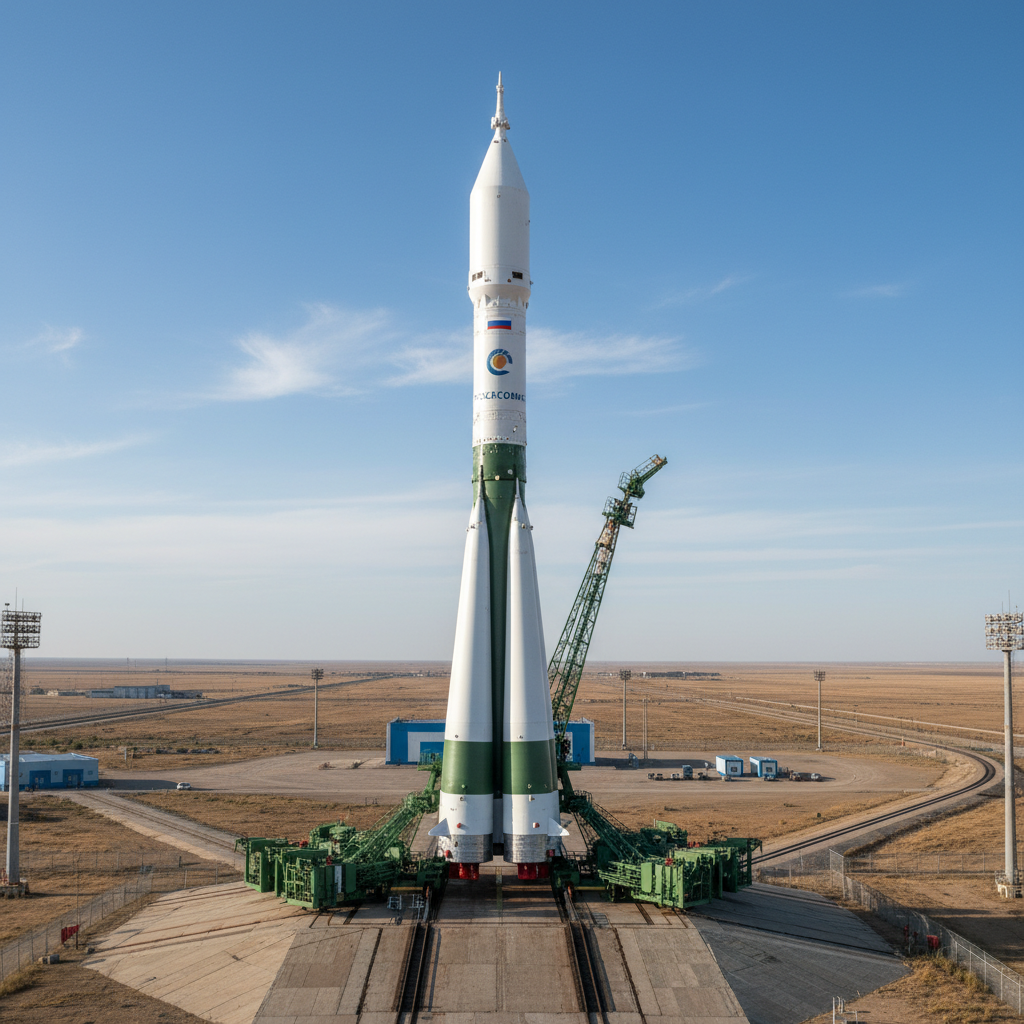
Russia is on track to launch its newest rocket, the Soyuz-5, before the end of this year. Dmitry Bakanov, head of Roscosmos, the Russian space agency, made the announcement in an interview with state media TASS.
“Yes, we are planning for December,” Bakanov said, according to a translation by the French news agency AFP. “All the preparations are almost in place for the first launch.” Liftoff will take place from the Baikonur cosmodrome in Kazakhstan, and, if successful, will mark the first test flight of a rocket that has been under development for more than a decade. Roscosmos says several tests will follow, but it does not expect to begin routine operations until 2028.
The Soyuz-5—also known by the name Irtysh—isn’t a clean-sheet design. It is a larger version of the Zenit-2, a liquid-fueled rocket that dates to the 1980s. Zenit’s original design came from Ukraine’s Yuzhnoye Design Bureau. The Soviet-era space program was split among newly independent states after the collapse of the USSR in 1991. Although Zenit rockets were manufactured in Ukraine, they used RD-171 engines designed and built in Russia. For decades, it was one of the few areas of aerospace development in which Russian and Ukrainian companies had worked together. Following Russia’s invasion of Ukraine in 2022, that cooperation abruptly ended. Russia hit the Ukrainian production facility that had once built Zenit rockets in late 2023.
Soyuz-5 is essentially a domestic version of the Zenit. Bigger, with no Ukrainian parts, it is the realization of years of Russian talk about no longer depending on foreign technology. In addition to resolving the Ukraine question, Moscow will also be able to retire the Proton-M, an aging rocket first flown in the 1980s.
A Bridge Between Past and Future
By its own classification, the Soyuz-5 is a medium-lift launch vehicle. It can put about 17 metric tons of payload into low-Earth orbit, a respectable payload for its class. The rocket is just slightly bigger than Zenit in terms of its propellant tanks. The biggest change is at the center of the vehicle, with the newest member of the RD-171 family of engines.
This is a Russian adaptation of the engine that powered the Energia program in the 1980s. Energia was intended to loft the Soviet Union’s space shuttle, Buran. The most recent RD-171MV, as used by Soyuz-5, has one key distinguishing feature: it contains no parts from Ukraine. Burning kerosene and liquid oxygen, the engine is capable of producing more than three times the thrust of the Space Shuttle main engine, the most powerful liquid-fueled engine NASA has ever built.
But, unlike the Space Shuttle, Soyuz-5 is an expendable rocket. Newer players in the field, especially SpaceX and its Falcon 9 rocket, are designed to be reused. Soyuz-5 has almost no prospect of challenging those reusable competitors for commercial payloads. Roscosmos still has several workhorse rockets in its lineup for international customers: Soyuz-2 for crewed flights and the Angara family for heavier payloads. Neither has seen strong demand, however, outside of government contracts.
For Russia, Soyuz-5 has a different purpose. To a limited extent, it is a replacement for the Proton rocket, but it also serves as a bridge to the future. Development of a modern, reusable rocket has been ongoing for years. The Amur, also known as Soyuz-7, is meant to one day compete with SpaceX by offering comparable performance at a lower price point. The secret is methane-fueled, reusable first stages. But Amur is years behind schedule, and likely will not enter service until 2030 or later.
In this light, Soyuz-5 is a stopgap, a rocket that does not reinvent the wheel but does allow Roscosmos to move forward. It bridges the past of Soviet-era launchers like Zenit with a future that, for now, only exists on paper.
The good news is that Russia still has launch vehicles for today. Soyuz-2 and Angara will keep flying alongside Soyuz-5. Proton will be retired from service, but its heritage is carried on by the Soyuz booster. In commercial terms, however, the rocket market has changed significantly over the last decade. SpaceX and a growing number of Chinese providers have shaken up an industry that had, up until that point, seen little innovation. New entrants, and especially reusable launch vehicles, have driven prices down and offered customers a level of flexibility that was previously unheard of. It’s an open question if or when Russia will be able to recapture a share of the international market.
It’s also a testament to Roscosmos’ resiliency that Soyuz-5 is ready for flight at all. The agency is strapped for resources as the war in Ukraine continues, and its space launches face sanctions and equipment export bans from the U.S. and its allies. The reactivation of Baikonur is a particularly impressive feat. To have managed to move the project forward in that environment is a success. A successful December launch would be further confirmation that Russia can still develop new rocket hardware, if under very constrained circumstances.
No matter how the future of launch unfolds, for now, Soyuz-5 is a bridge. It is, in many ways, an artifact from the past. But for Russia, the change in ownership of key parts from foreign to domestic supply chains is a political and industrial milestone.